- Period
- 2019–2020
- Location
- Vales Region (Rio Pardo Valley and Taquari Valley), Rio Grande do Sul, Brazil
- Partners
- PROPUR/UFRGS (Master’s in Urban and Regional Planning)
- My role
- Independent master’s research: data collection, database, statistical and spatial analysis, cartography (more than 30 maps) and writing.
- Data
- Company registry (Receita Federal CNPJ, 2020) · MAPA establishment registry (2020) · RAIS and CAGED (2018) · COMEX STAT exports (2018) · IBGE (2010–2018) · SES-RS (2020)
- Tools & methods
- QGIS · Excel · Adobe Illustrator · Flow mapping · Documentary research
The challenge#
The Vales Region is home to two of Brazil’s most globalized agro-industrial chains: tobacco in the Rio Pardo Valley and poultry in the Taquari Valley. Both are dominated by multinational companies, yet the two sub-regions developed very different urban networks. The research asked whether the organization of each production chain explains that difference.
Approach#
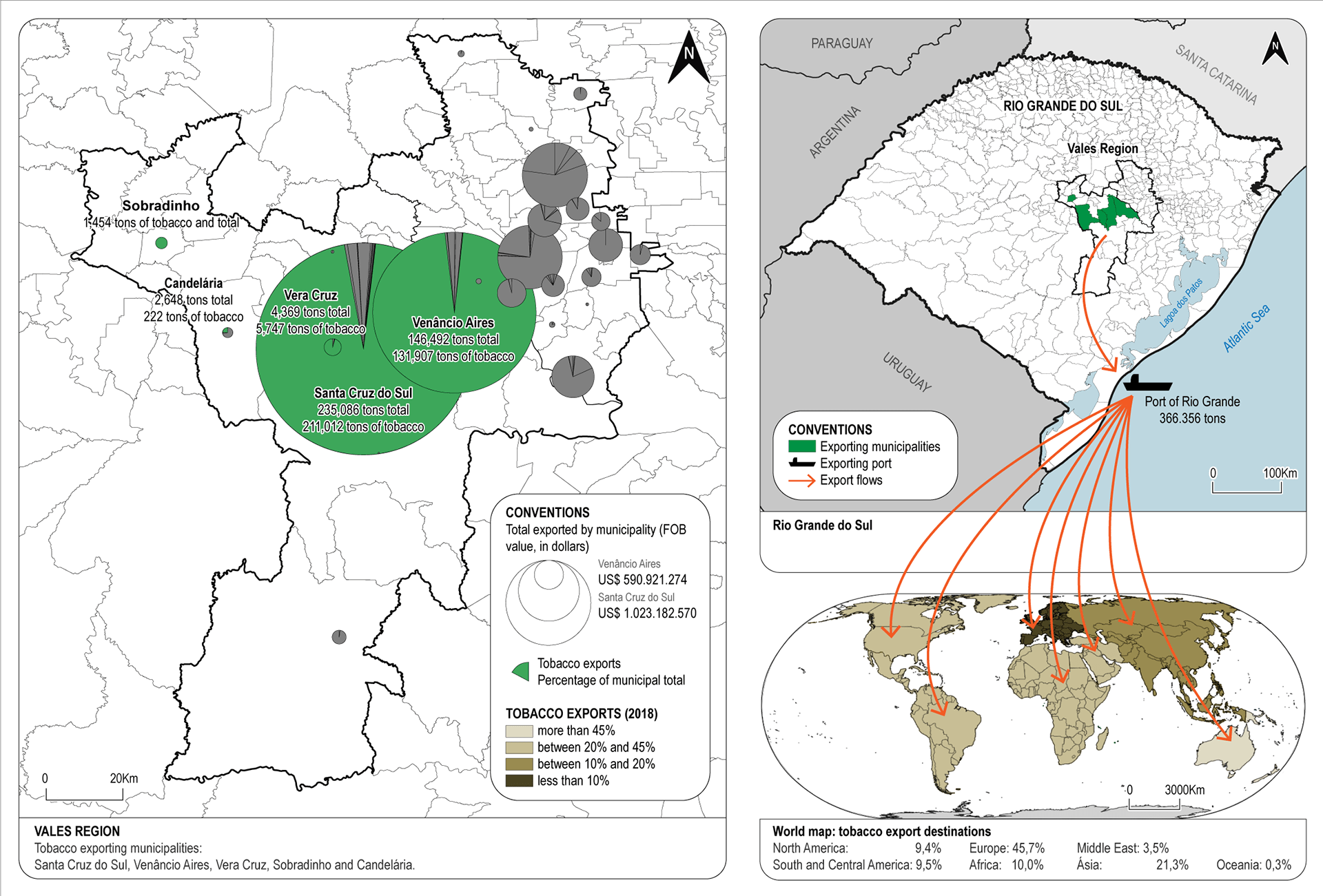
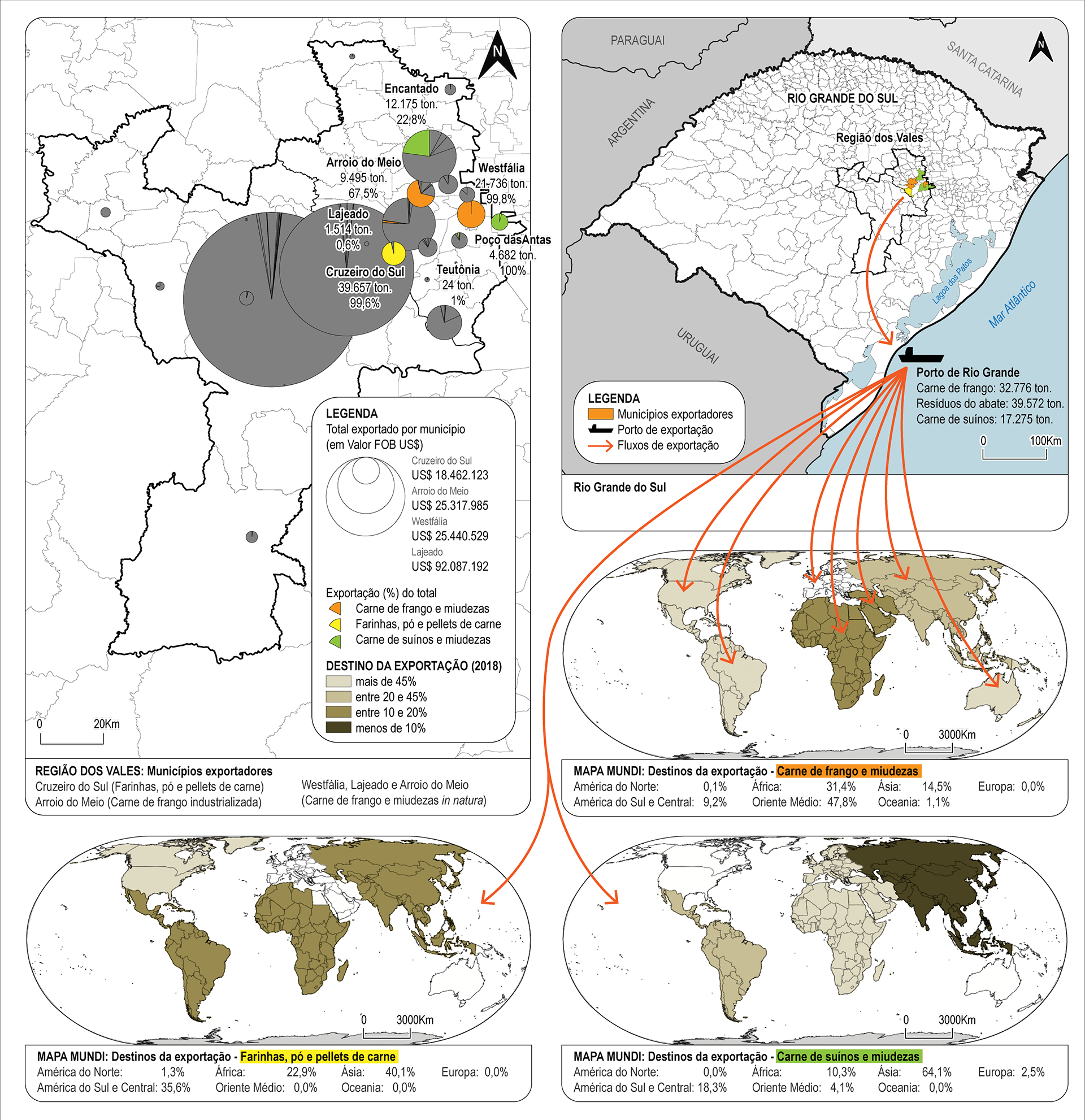
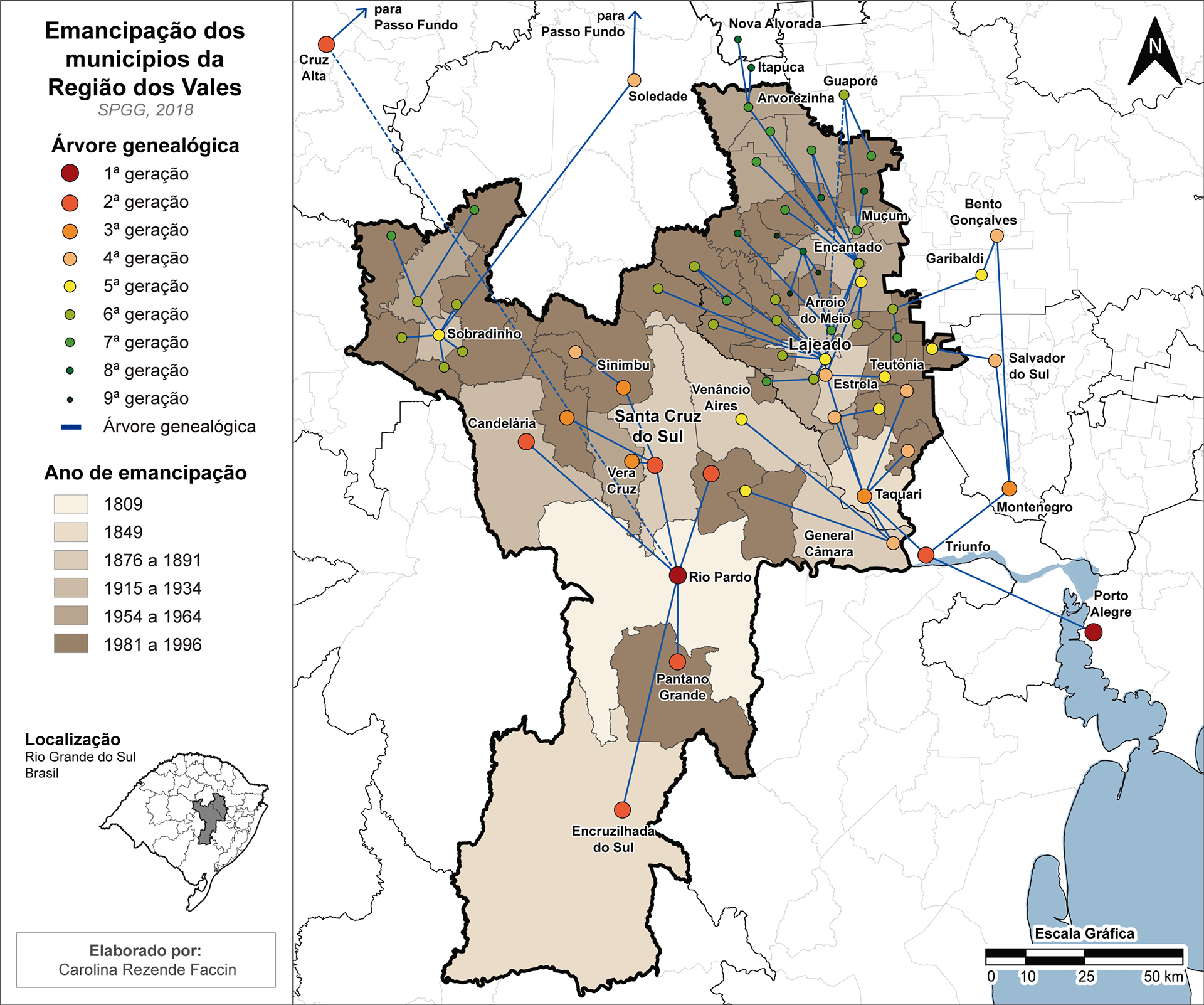
I mapped every establishment of the two chains and connected them to employment, export and corporate headquarters data, producing more than 30 original maps.
- Firms
Locate establishments from company and agriculture-ministry registries
- Jobs & trade
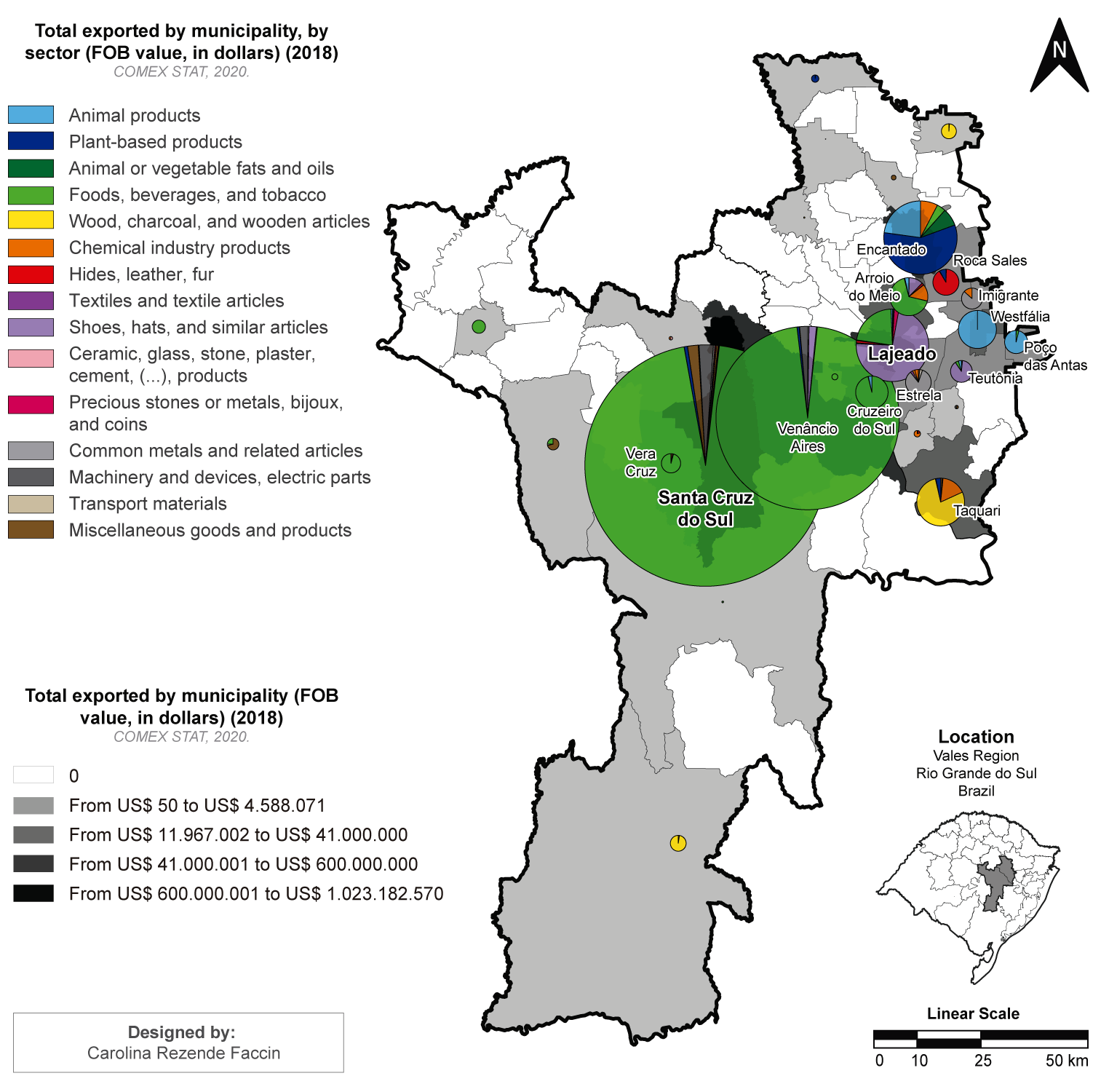
Employment (RAIS, CAGED) and exports (COMEX STAT) by municipality
- Flows
Capital, information and export flows from global HQs to local plants and ports
- Comparison
Rio Pardo Valley vs. Taquari Valley urban networks
Results#
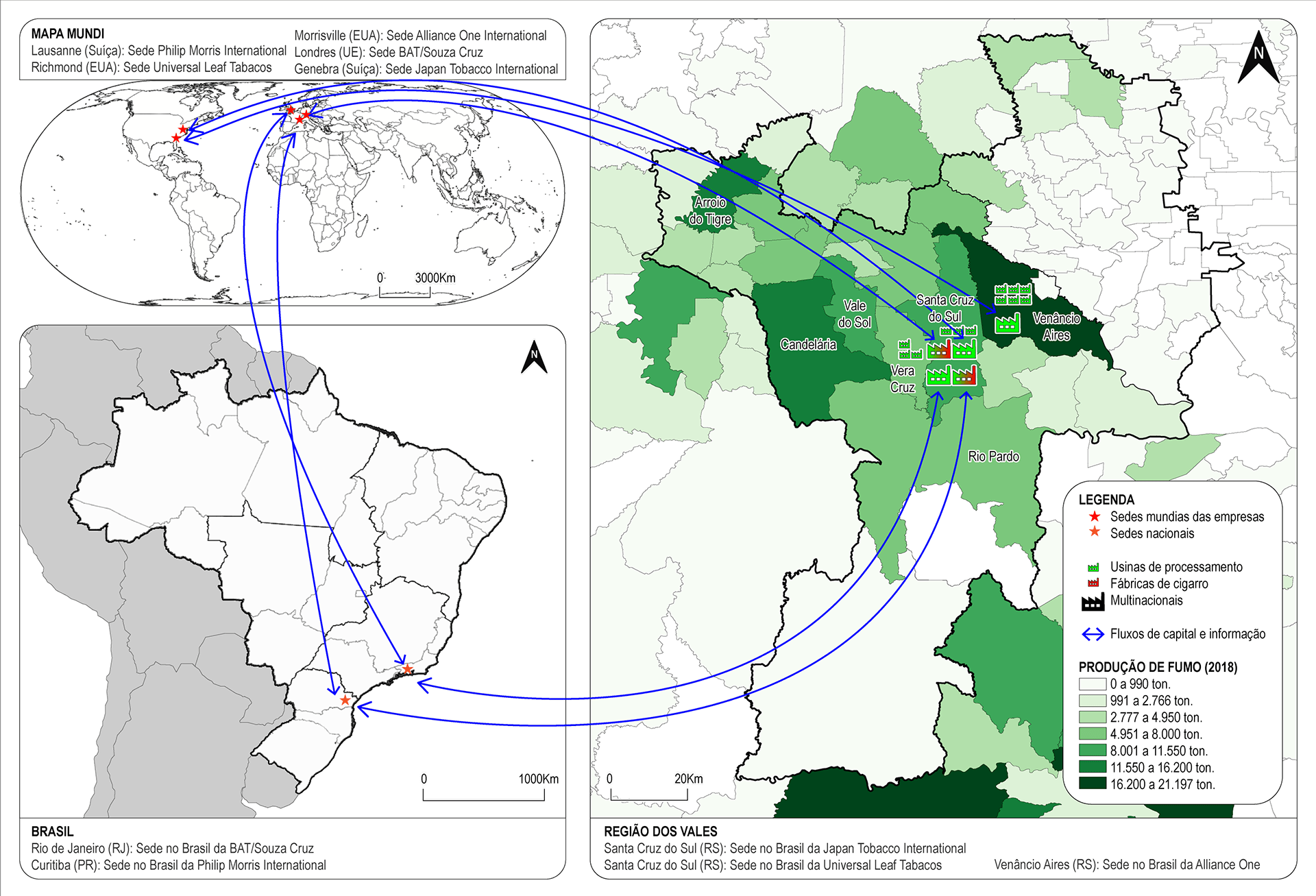
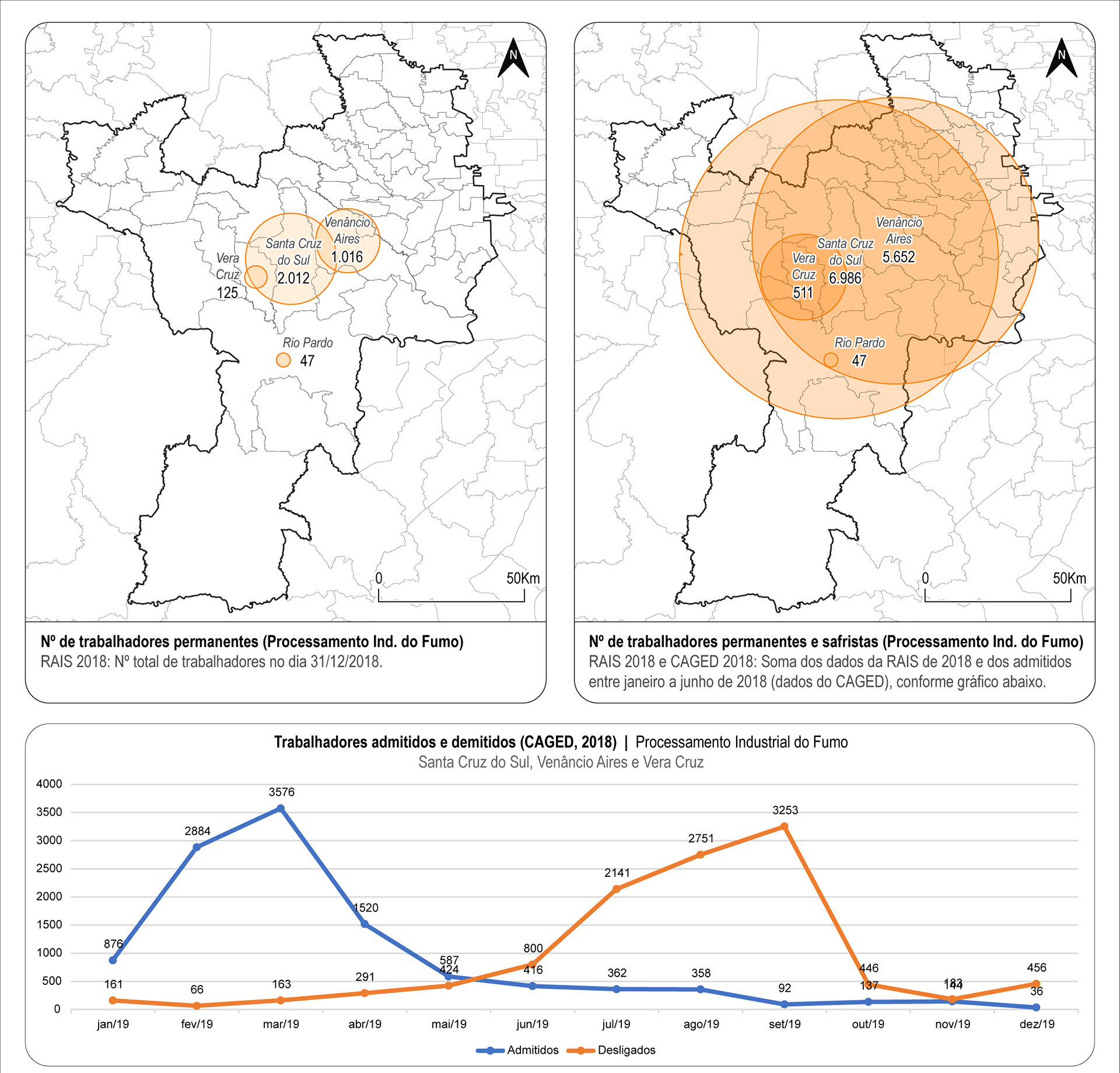
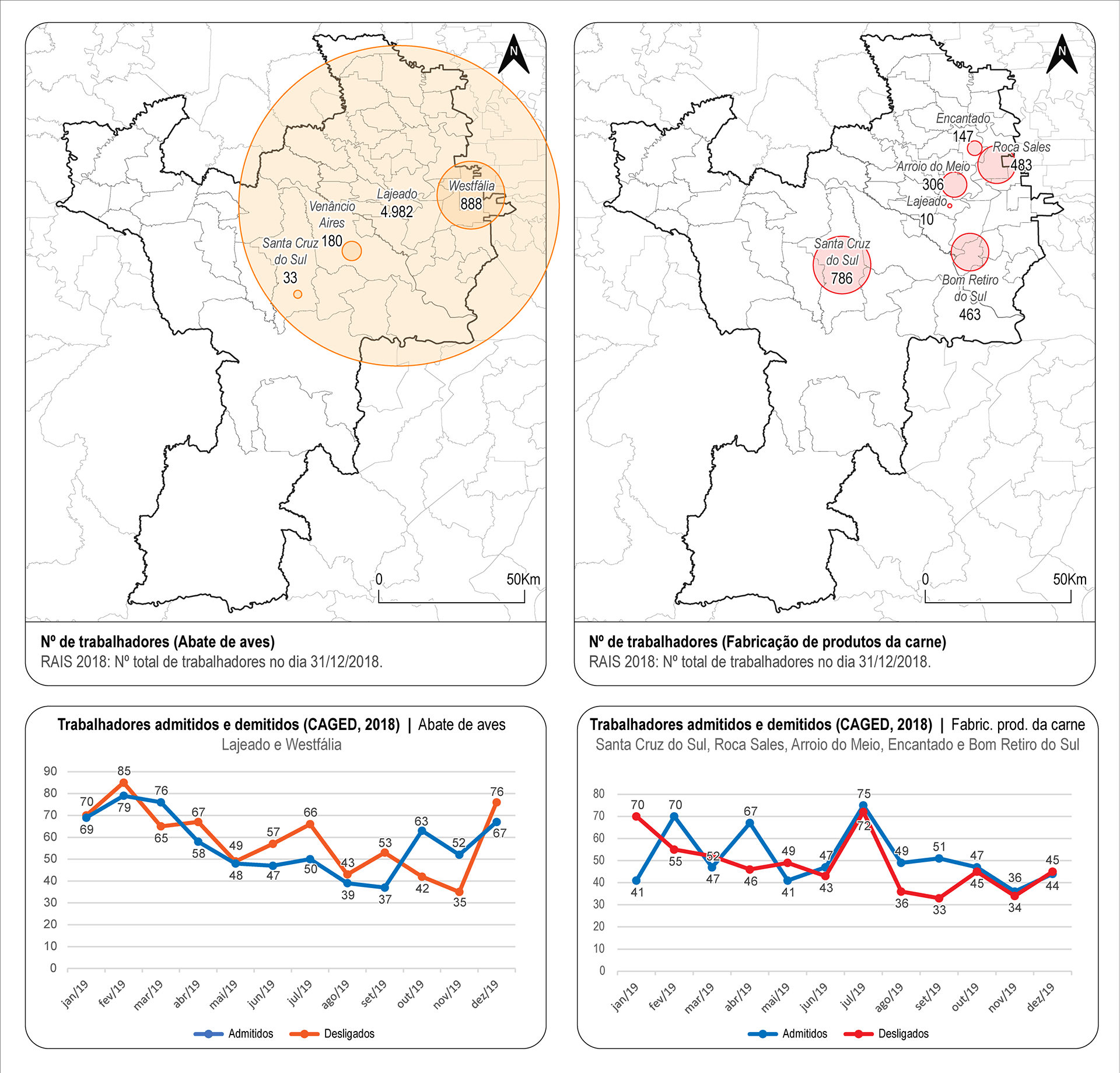
- The tobacco chain is highly centralized: processing plants of multinational companies concentrate in Santa Cruz do Sul and Venâncio Aires, producing a monocentric, simpler urban network in the Rio Pardo Valley. Employment is also strongly seasonal, with hiring peaks in February–March and layoffs in August–September.
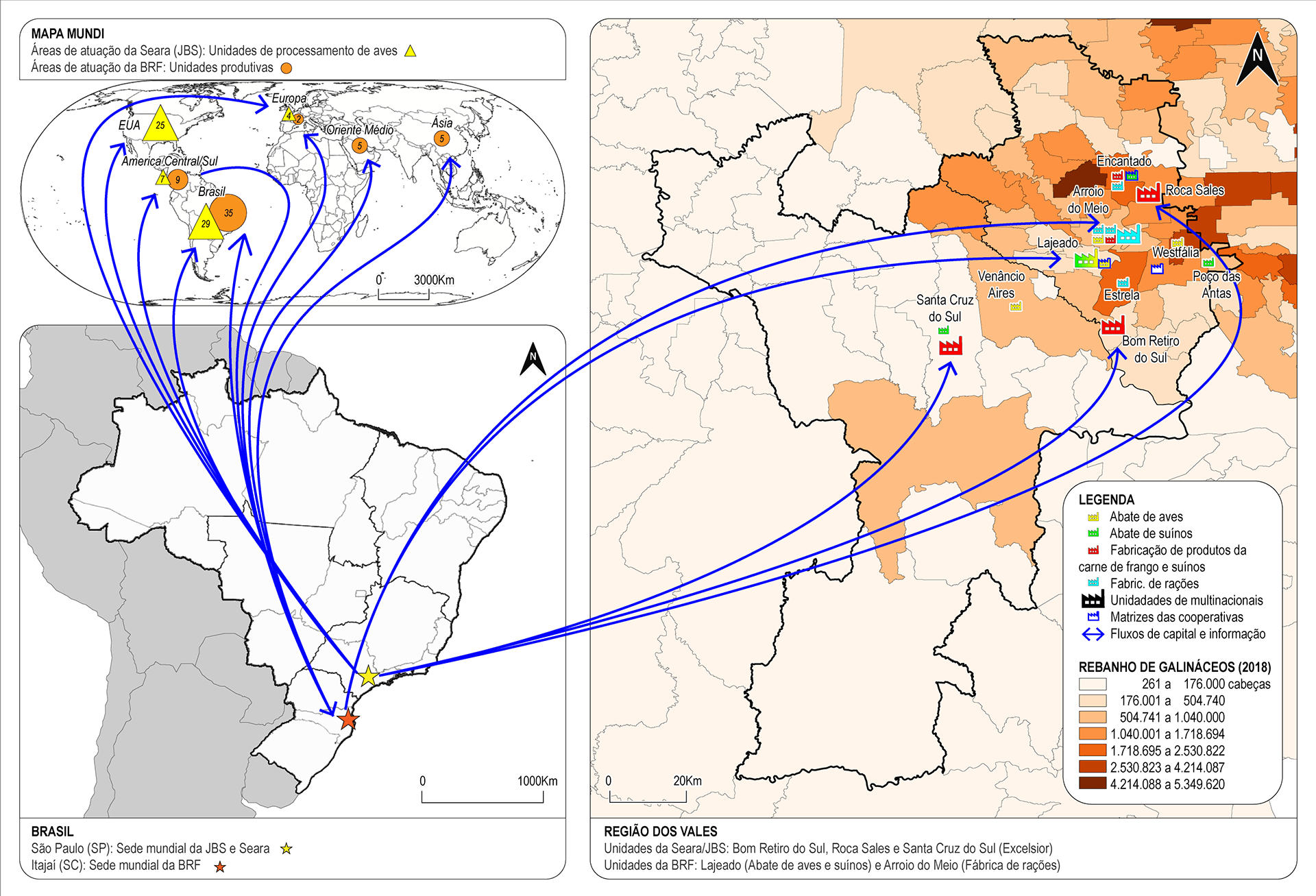
- The poultry chain is spread across many municipalities, with slaughterhouses and feed factories distributed through the Taquari Valley, producing a polycentric network with denser interactions between cities.
- The urban network is both a reflection of and a condition for the territorial division of labor.
Why it matters#
The findings show that regional development policies cannot treat neighboring regions as the same: the structure of the dominant economic activity shapes where jobs, services and infrastructure are needed.
- Dissertation (PT)
- Faccin & Silveira (2021) (PT): urban network and territorial division of labor in the tobacco and poultry chains.
- Faccin & Silveira (2024) (EN): global spatial interactions of medium and small cities through export and import flows.
Maps#